
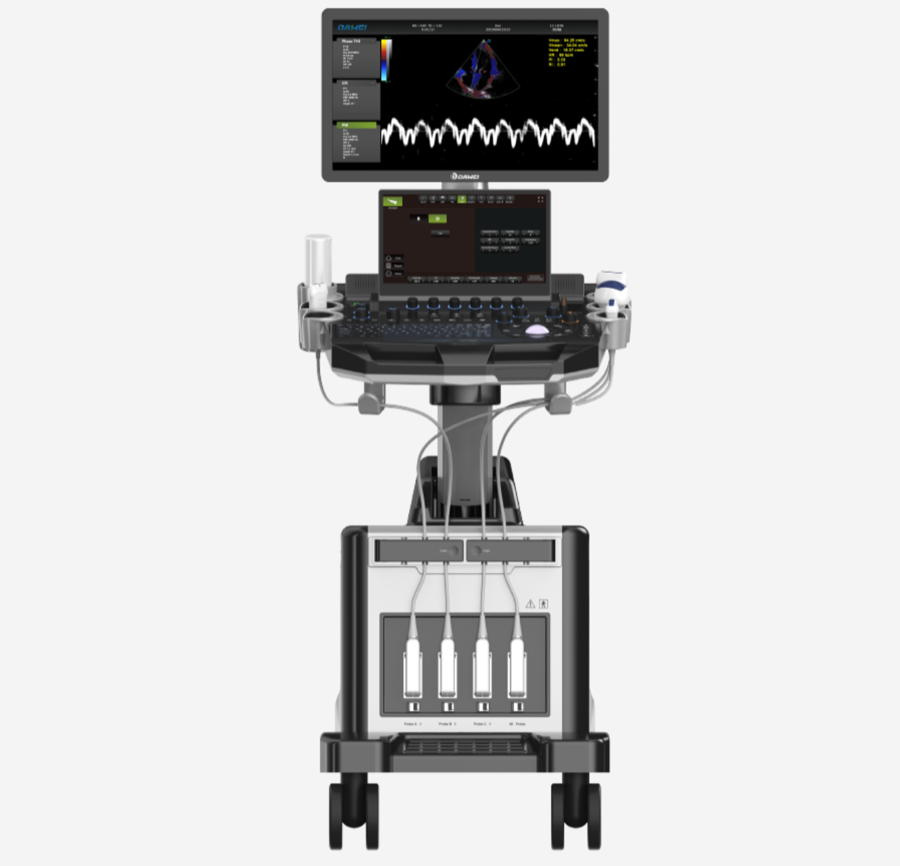
Portable veterinary ultrasound is one of the most attractive product categories for medical and veterinary equipment distributors. It is easier to demonstrate than many large systems, useful for a wide range of clinics and relevant to both companion animal and field applications. At the same time, importers can lose margin quickly if they choose the wrong probe configuration, underestimate certification questions or fail to plan after-sales support.
This guide is written for distributors and importers evaluating portable veterinary ultrasound products before placing an order. It focuses on commercial selection, product configuration and practical import issues.
Linear, Convex and Micro-Convex Probes
The probe is the heart of the ultrasound configuration. A distributor should understand probe differences well enough to recommend the right product to different customers.
Linear probes
Linear probes are commonly used for superficial structures. In veterinary practice, they may support tendons, small parts, vessels, soft tissue, superficial masses and some musculoskeletal applications. They usually provide higher frequency and better near-field resolution, but they are not the first choice for deeper abdominal imaging in larger patients.
Linear probes are attractive to clinics that perform superficial scanning, vascular access, guided procedures or small-parts examination. For distributors, linear models can be positioned as a useful second device or as part of a multi-probe offering.
Convex probes
Convex probes are widely used for abdominal, reproductive and general imaging. They provide deeper penetration and a wider field of view. For many pet hospitals, a convex probe is one of the most practical starting configurations because abdominal scanning is a common need.
When importing portable ultrasound for general veterinary clinics, distributors often prioritize convex or multi-probe systems because they cover more routine cases. The tradeoff is that superficial resolution may not match a linear probe.
Micro-convex probes
Micro-convex probes are especially useful in small animals because the smaller contact surface fits between ribs and works well on cats and small dogs. They are popular in veterinary applications because they balance depth, access and maneuverability. For pet hospitals that see many small animals, micro-convex capability is often a strong selling point.
Most Common Configurations for Pet Hospitals
Pet hospitals usually ask for practical configurations rather than the maximum specification list. Common needs include abdominal scanning, pregnancy diagnosis, bladder examination, liver and kidney evaluation, basic cardiac screening and emergency assessment. A portable system should be easy to move, quick to start and simple enough for busy clinicians.
A distributor can segment customers into three groups. Entry-level clinics may need one reliable scanner for abdominal and reproductive work. Growing clinics may want a handheld or portable system with multiple probe options. Advanced hospitals may require better image quality, Doppler functions, workflow features and stronger documentation.
CHIGOX offers portable and handheld options in the Ultrasound category, including veterinary-focused systems such as CGVU-21 Pro Veterinary Color Doppler Ultrasound System. Distributors can use these product categories to build different price tiers for clinics.
OEM and ODM Choices
OEM and ODM are often discussed casually, but they mean different business commitments. OEM usually involves branding, packaging, language, accessories or configuration based on an existing product platform. It is suitable for distributors who want market identity without long development time.
ODM means deeper customization. It may involve industrial design, software interface changes, special accessories or market-specific features. ODM can be valuable for established distributors with clear volume, but it usually requires longer lead time, clearer technical communication and higher minimum order expectations.
Before requesting OEM or ODM, importers should prepare brand requirements, target price, expected annual volume, language needs, plug type, packaging rules and after-sales responsibilities. A vague customization request can slow down the project and create misunderstandings.
CE, FDA and Common Regulatory Questions
Regulatory requirements depend on the destination market, product classification and local importer responsibilities. CE documents may be needed for European markets and markets that reference European compliance. FDA-related questions may arise for the United States. Other countries may require local registration, importer licenses, test reports, labels or customs documents.
Distributors should not wait until goods are ready to ask about documents. Before placing an order, confirm the intended market, required certificates, labeling language, user manual requirements and whether local registration is necessary. In many cases, the importer is responsible for confirming local rules even when the manufacturer provides supporting documents.
A professional supplier should communicate clearly about available documentation and limitations. Overpromising certification can create serious import risk. Importers should keep document review as part of the quotation process.
Questions to Ask Before Confirming an Order
Before confirming an order, distributors should ask practical questions that reflect real customer use. Which species and body sizes will the scanner mainly serve? Does the customer need abdominal imaging, reproductive work, cardiac screening or superficial scanning? Is wireless connection stable in the clinic environment? What mobile device or monitor is required? Are software updates simple for the end user? These questions help prevent mismatched orders and reduce after-sales pressure.
It is also useful to request sample images, product videos, accessory lists and packing details before payment. A distributor can use these materials to train sales teams and prepare marketing pages before the goods arrive. This shortens the time between import and first sales.
Import Planning and After-Sales Support
Importing portable ultrasound is not only about freight cost. Distributors should plan packaging protection, spare probes, chargers, batteries, software updates, user manuals, training videos and warranty communication. A small accessory problem can become a major customer complaint if the distributor has no replacement plan.
Check plug standards, language requirements, carton marks, HS codes, customs paperwork and local taxes before shipment. For markets with complex customs procedures, work with a forwarder familiar with medical or veterinary equipment. Also confirm whether demo units are needed for sales teams and exhibitions.
After-sales support should be part of the business model. Distributors selling to pet hospitals need fast responses, practical training materials and clear troubleshooting steps. The easier the product is to demonstrate and support, the faster a distributor can build repeat orders.
How Distributors Should Position Portable Ultrasound
Successful distributors do not sell portable veterinary ultrasound as a generic device. They position each configuration for a specific buyer. A mobile veterinarian may care about battery life, carrying case and fast startup. A pet hospital may care about image quality, probe choice and documentation. A distributor selling to rural practices may need a robust package with simple training materials and easy replacement accessories. Clear positioning reduces price pressure because the customer understands why a specific configuration fits their work.
Demo strategy is also important. Ultrasound is easier to sell when veterinarians can see the interface, probe handling and image workflow. Importers should prepare demo units, sample scan images, product videos and a comparison table that explains convex, linear and micro-convex use cases in plain clinical language. Sales teams should avoid promising that one probe is ideal for every examination. Honest guidance builds trust and reduces after-sales disputes.
For online marketing, distributors should build landing pages around clinical applications: abdominal ultrasound for small animals, reproductive scanning, emergency veterinary ultrasound and portable systems for mobile practice. These pages should link to the product category, quotation form and support materials. Good content helps search visibility and gives sales staff a better tool for follow-up.
Packaging, Language and Market Fit
Before importing, distributors should confirm package durability, carton labeling, plug type, charger requirements, user manual language and software language. These details sound small, but they strongly affect customer experience. A product that arrives with the wrong plug, unclear menu language or weak packaging can damage the distributor's reputation even when the scanner itself performs well.
Market fit also includes price tier. Some customers need an entry-level handheld scanner; others need a cart-based color Doppler system with stronger presentation for hospital use. A distributor with only one model may miss opportunities. A more balanced portfolio can include handheld options for daily practice, portable laptop-style options for higher performance and cart-based systems for hospitals that want a more complete diagnostic room.
How to Choose a Supplier
A supplier should be evaluated by product stability, communication speed, documentation, production capacity, spare parts and willingness to support distributors. Price matters, but the lowest price can be expensive if the product creates returns, unclear documents or weak after-sales support.
CHIGOX supports distributors with medical and veterinary equipment categories, product images, configuration guidance and global market communication. Importers can review Ultrasound, Endoscopy System and related products to build a broader equipment portfolio.
Become a CHIGOX distribution partner.
FAQ
Which ultrasound probe is most common for pet hospitals?
Many pet hospitals need abdominal and reproductive imaging first, so convex or micro-convex configurations are common. Linear probes are often added for superficial structures, vascular access and musculoskeletal work.
What is the difference between OEM and ODM?
OEM usually means branding or configuration based on an existing product platform. ODM involves more customized development, appearance or feature adjustments, and usually requires higher volume and longer lead time.
Do distributors need CE or FDA documents?
Requirements depend on destination market and product classification. Distributors should confirm local regulations before import and request the relevant documents from the supplier early.
How can importers reduce after-sales risk?
Choose models with stable software, clear manuals, available accessories, spare parts, training materials and responsive supplier communication.
Need help choosing equipment?
Become a CHIGOX distribution partner.