
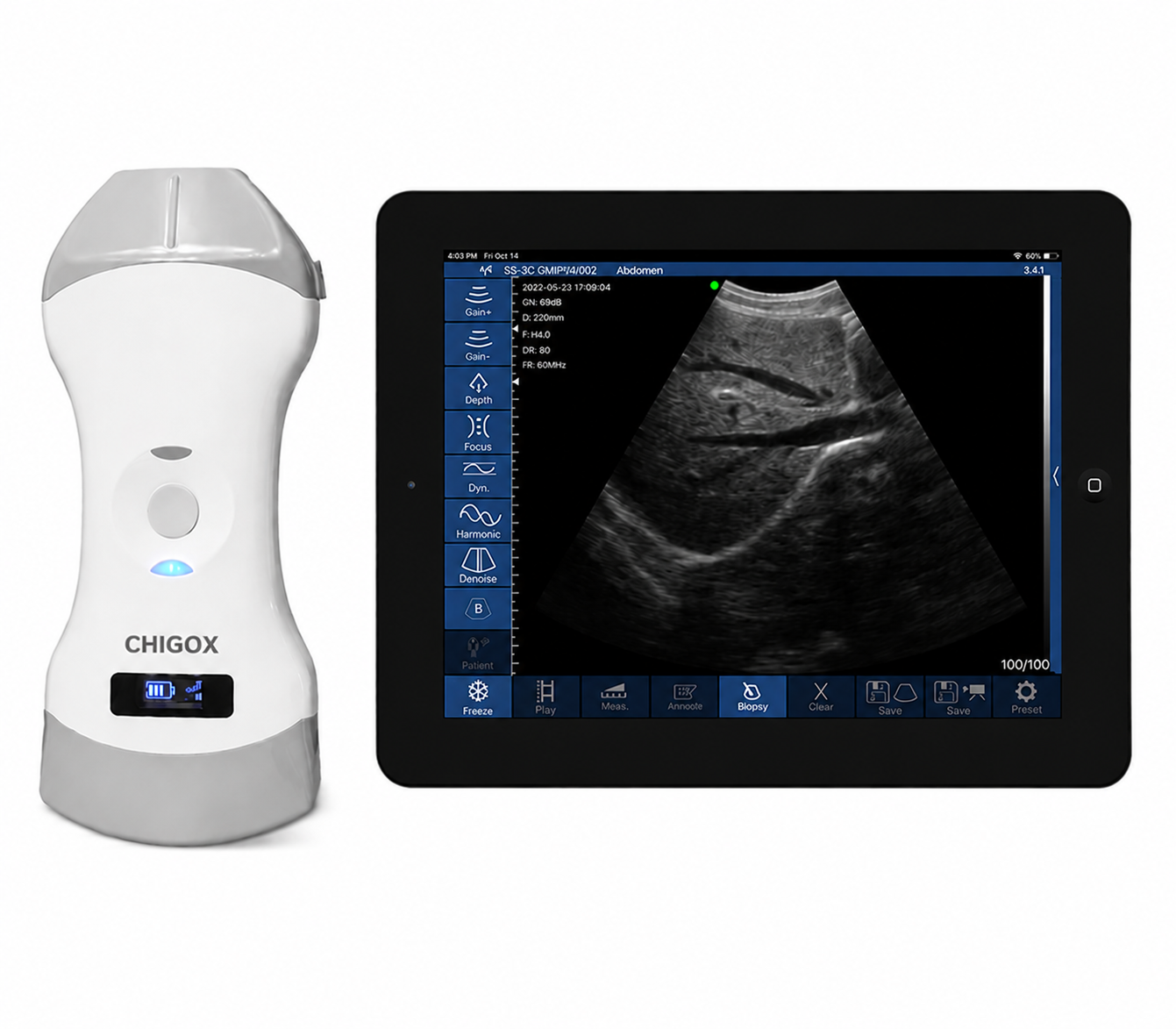
Linear, convex and phased array probes differ primarily in footprint, image shape and the balance they typically make between frequency, near-field detail and imaging depth. For a buyer, the practical question is not which probe is universally best; it is which probe format fits the imaging task, working environment and approved procurement requirement.
This guide explains general ultrasound knowledge about probe types. General industry application examples below do not state the intended use, regulatory status or market authorization of any CHIGOX model. For model-specific configuration, documentation and destination-market questions, confirm the details with CHIGOX before purchase.
What is the difference between linear, convex and phased array ultrasound probes?
Linear probes usually create a rectangular image and favour near-field detail; convex probes use a curved footprint and create a widening field of view for deeper imaging; phased array probes use a small footprint and create a sector-shaped image for scanning through limited acoustic windows.
| Probe type | Probe footprint / image shape | Relative frequency / imaging-depth characteristics | General industry application scenarios | Main selection advantages / limitations | CHIGOX model |
|---|---|---|---|---|---|
| Linear | Usually a flat, wider footprint with a rectangular image. | Commonly uses relatively higher frequencies, supporting higher detail in shallower structures with less depth reach than lower-frequency alternatives. | Superficial structures, vascular assessment, musculoskeletal imaging and some needle-guidance workflows. | Strong near-field detail and a broad rectangular view; less suitable when the principal requirement is deeper imaging. | CGU-L Wireless Handheld Linear Ultrasound Scanner |
| Convex | A curved footprint; the image field widens with depth into a curvilinear or sector-like view. | Commonly uses relatively lower frequencies, trading some near-field detail for deeper penetration and a wider deep field of view. | Abdominal, pelvic and obstetric imaging workflows. | Useful when deeper structures and a widening field of view are the priority; not usually the first choice where high-detail superficial imaging is the main requirement. | CGU-C Wireless Handheld Convex Ultrasound Scanner |
| Phased Array | Usually a small contact footprint with a sector- or fan-shaped image. | Commonly uses relatively lower frequencies for deeper imaging through a small acoustic window. | Cardiac imaging and other workflows where access between ribs or through a small window is important. | Small footprint can be useful in limited acoustic windows; the near-field field of view is narrower than a typical linear probe. | CGU-4P Wireless Handheld Phased Array Ultrasound Scanner |
Table note: General industry examples only. They are not CHIGOX model-specific intended-use, clinical-performance or regulatory claims.
Quick Selection Guide
Start with the required imaging task and probe geometry, then use the following routes to narrow the configuration discussion. The final selection should be confirmed against your approved workflow, documentation needs and destination market.
- Linear: consider this option when near-field detail, superficial structures, vascular work or musculoskeletal imaging are the general priorities in your requirement. Review the CGU-L linear scanner.
- Convex: consider this option when the general requirement prioritizes deeper imaging and a widening field of view, such as abdominal or pelvic workflows. Review the CGU-C convex handheld ultrasound scanner.
- Phased Array: consider this option when a small footprint and sector image are required for a limited acoustic window, commonly associated with cardiac workflows. Review the CGU-4P phased array ultrasound scanner.
- CGU-LCP: consider this three-format option when the requirement calls for linear, convex and phased array probe types in one listed configuration. Review the CGU-LCP Wireless 3-in-1 Handheld Ultrasound Scanner.
When is a linear ultrasound scanner the better starting point?
A linear ultrasound scanner is generally the better starting point when the requirement emphasizes shallow structures and near-field detail. Its flat footprint and rectangular image are common reasons buyers select a linear probe for general superficial, vascular and MSK workflows.
The trade-off is depth. Higher-frequency imaging generally provides more detail close to the probe but attenuates more quickly as depth increases. A buyer comparing a linear ultrasound scanner with a convex handheld ultrasound scanner should therefore begin with the expected imaging depth, not with a generic feature checklist.
To review CHIGOX's linear option, visit the CGU-L Wireless Handheld Linear Ultrasound Scanner. Confirm separately which model configuration and documentation are appropriate for your requirements.
When is a convex handheld ultrasound scanner the better starting point?
A convex handheld ultrasound scanner is generally the better starting point when deeper imaging and a widening field of view matter more than near-field detail. Its curved probe surface produces a field of view that expands with depth, which is why convex probes are commonly associated with general abdominal and pelvic imaging workflows.
The trade-off is that the characteristics that support deeper imaging are not the same as those that prioritize high-detail superficial imaging. If a procurement requirement includes both shallow and deeper imaging needs, compare a dual-format option rather than assuming one probe type covers both.
To review CHIGOX's convex option, visit the CGU-C Wireless Handheld Convex Ultrasound Scanner. Consider the related when both listed probe formats are required.
When is a phased array ultrasound probe the better starting point?
A phased array ultrasound probe is generally the better starting point when a small footprint and sector-shaped view are needed to scan through a limited acoustic window. This is why phased array probes are commonly used in general cardiac imaging workflows and settings where access between ribs is important.
Compared with a linear probe, a phased array probe typically has a smaller contact area and a narrower near-field view. Compared with a convex probe, it is designed around a different footprint and beam-steering approach. The selection should therefore follow the required window, image geometry and working depth.
To review CHIGOX's phased array option, visit the CGU-4P Wireless Handheld Phased Array Ultrasound Scanner.
When should a buyer consider more than one probe type?
Consider more than one probe type when your purchasing requirement spans different image geometries or depth priorities. A linear probe, convex probe and phased array probe solve different general imaging problems; combining them may reduce the need to choose one format as a compromise.