
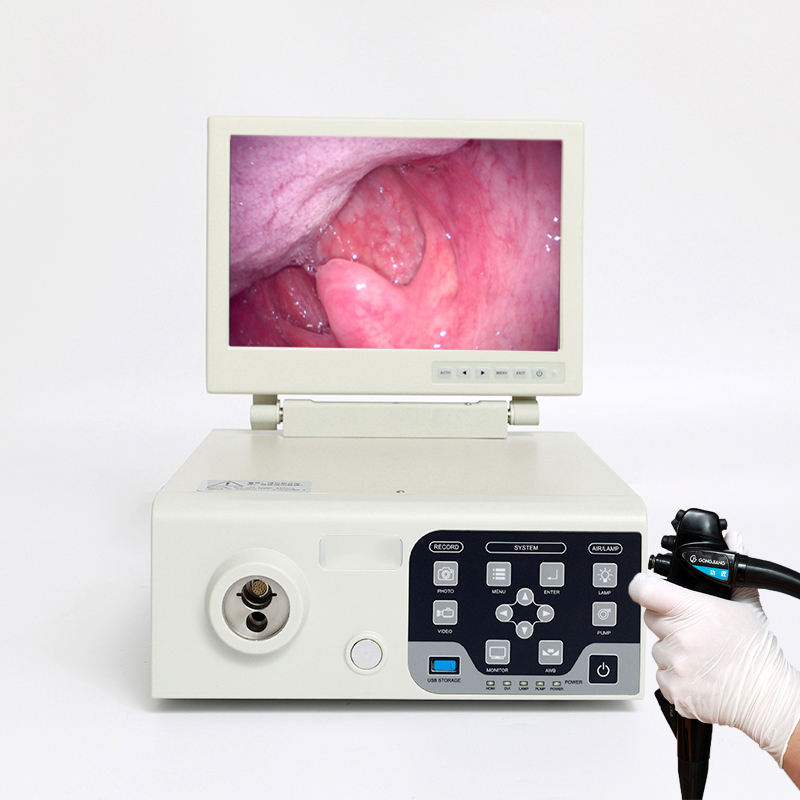
Buying a veterinary endoscope is not only a technical decision. For a small animal clinic, it changes how gastrointestinal, airway and ENT cases are diagnosed, how fast clinicians can make decisions, and how many procedures can stay inside the clinic instead of being referred out. The right system can support better case workups and new revenue. The wrong configuration can sit unused because it is too large for the patient population, too limited for biopsy, or too difficult for the team to operate.
This guide is written for clinic owners, veterinary doctors and purchasing managers who are comparing veterinary endoscopy systems for dogs and cats. It focuses on practical buying decisions rather than marketing specifications.
Understand the Main Types of Veterinary Endoscopes
Veterinary endoscopy is a broad term. A clinic may need a gastroscope, colonoscope, bronchoscope, rhinoscope, nasopharyngoscope or rigid scope depending on the cases it wants to handle. Before comparing prices, the first question should be: which clinical problem are we trying to solve most often?
Gastroscopes for gastrointestinal cases
A veterinary gastroscope is commonly used for upper gastrointestinal evaluation, foreign body retrieval, biopsy and chronic vomiting workups. For many small animal practices, this is the most commercially important scope because pet owners understand the value of avoiding exploratory surgery when a minimally invasive option is appropriate. A gastroscope usually needs enough working length to reach the stomach and proximal duodenum in dogs, while still being manageable in cats and small breeds.
If your clinic sees frequent vomiting, suspected gastric foreign bodies, chronic diarrhea requiring biopsy, or cases referred from nearby clinics, a gastroscope is often the first endoscope to consider.
Bronchoscopes for airway examinations
A veterinary bronchoscope is designed for airway evaluation. It is used for coughing, airway collapse assessment, lavage guidance, foreign body investigation and lower respiratory examination. Compared with a gastroscope, a bronchoscope normally has a smaller outer diameter and a shorter working length. Image quality and tip control are important because the airway is narrow and movement from breathing can make visualization more demanding.
Bronchoscopy may be less frequent than gastroscopy in a general clinic, but it can be valuable for practices with strong internal medicine, emergency or referral caseloads.
Rhinoscopes and nasopharyngoscopes for nose and throat cases
Rhinoscopy and nasopharyngoscopy are useful for nasal discharge, sneezing, suspected nasal foreign bodies, nasopharyngeal disease and upper airway evaluation. These scopes are usually smaller in diameter. For cats and small dogs, diameter matters more than almost any other specification. A scope that is too large may technically look attractive on a quotation sheet but will not be suitable for common patients.
Match Scope Size to the Animals You Actually See
The most common purchasing mistake is buying for the largest possible patient and then discovering that the system is uncomfortable or impractical for cats and toy breeds. A clinic should look at its appointment history and estimate the percentage of patients by size: cats, toy dogs, small dogs, medium dogs and large dogs.
For cats and toy breeds, a small-diameter scope is essential. For medium and large dogs, a slightly larger diameter can provide better handling, a more useful working channel and sometimes stronger image stability. If a clinic serves a mixed pet population, a modular system that supports more than one scope type is often more useful than a single-scope package.
Working length should also match use. A very short scope may be fine for nasal or airway work but not for gastrointestinal examination in larger dogs. A very long scope may be less convenient for small patients and harder for beginners to handle. The right answer is rarely the biggest scope or the longest scope; it is the size that fits the clinic's real case mix.
How to Choose the Working Channel
The working channel is the passage through which biopsy forceps, retrieval tools, brushes and flushing accessories are used. It determines what the doctor can do after seeing the lesion. A diagnostic scope with weak accessory compatibility may create frustration because the clinician can see the problem but cannot perform biopsy or retrieval efficiently.
A small working channel is acceptable for narrow airway and nasal scopes where patient size is the limiting factor. For gastroscopy, a larger channel is usually preferred because biopsy forceps and foreign body retrieval tools are common. However, a larger working channel usually comes with a larger insertion tube. That tradeoff must be evaluated carefully for clinics that see many cats and small dogs.
When comparing systems, ask for accessory compatibility, not only channel diameter. Confirm which biopsy forceps, cleaning brushes, retrieval baskets, graspers and snares are available. A complete solution should include the scope, processor, light source, monitor options, cleaning accessories and commonly used instruments.
Image System, Light Source and Data Management
Veterinary clinics should consider the entire endoscopy platform, not just the scope. Image quality affects diagnosis, communication with pet owners and documentation. A clear image helps veterinarians identify inflammation, ulcers, bleeding, foreign bodies and abnormal tissue patterns. A stable light source supports consistent visualization and reduces the learning burden for new users.
Data management is increasingly important. Clinics often use images or short videos to explain findings to pet owners and to support medical records. Systems with image capture, video recording, USB export or workstation options can improve communication and make reports look more professional.
CHIGOX veterinary endoscopy solutions are designed to support clinical visualization and practical workflow needs. Clinics can review the current Veterinary Endoscope System and the broader Endoscopy System category to compare human and veterinary visualization platforms.
How to Estimate ROI Before Purchase
ROI should be calculated before the clinic signs a purchase order. A simple approach is to estimate monthly procedures, average procedure income and variable costs. For example, if a clinic expects six gastroscopy-related procedures per month and each procedure generates a professional fee, anesthesia fee, consumables and follow-up value, the total monthly contribution can be compared with the equipment cost, financing cost and accessory replacement cost.
Do not calculate ROI only from the endoscopy fee. Endoscopy can also create revenue from pre-anesthetic bloodwork, imaging, hospitalization, biopsy interpretation, medication and follow-up appointments. It may also reduce lost revenue from referred cases. A clinic that keeps more internal medicine work in-house can strengthen client retention.
At the same time, ROI should be realistic. A clinic with no doctor trained in endoscopy and no plan to promote the service may take longer to recover the investment. Training, case selection and client education matter as much as the device itself.
Common Purchasing Mistakes
The first mistake is buying only by price. A low-cost package may omit key accessories or use a scope size that does not match the clinic. The second mistake is choosing a system without considering cleaning and maintenance. Endoscopes must be handled carefully, cleaned properly and stored safely. The third mistake is ignoring workflow. If the system is difficult to set up, doctors may avoid using it during busy clinic hours.
Another common mistake is buying a single scope and expecting it to handle every case. Gastrointestinal, airway and nasal examinations have different size and channel requirements. A clinic does not need to buy everything at once, but it should choose a platform that can expand.
Finally, clinics sometimes forget to evaluate supplier support. Ask whether the supplier can help with configuration, accessories, documentation, shipping, training materials and after-sales communication. Medical equipment is not a one-time box purchase; it is part of the clinic's clinical workflow.
Practical Buying Checklist
Before ordering, list your top three procedures, the smallest patient size you expect to treat, the accessories you need, the available room setup, who will operate the system and how cases will be priced. Then compare systems against those answers. This approach prevents overbuying, underbuying and choosing equipment that looks good online but does not match daily practice.
For clinics that want a professional configuration review, CHIGOX can help match scope diameter, working channel and system configuration to the clinic's patient mix and business plan. Contact CHIGOX for a professional recommendation.
FAQ
What type of endoscope should a small animal clinic buy first?
Most small animal clinics start with a gastroscope because gastrointestinal cases are common and the procedure is easier to explain to pet owners. Clinics with strong respiratory case volume may add a bronchoscope or nasopharyngoscope later.
Can one veterinary endoscope cover dogs and cats?
One system can often support both dogs and cats, but the scope diameter and working length must match the patient mix. A clinic that sees many cats and toy breeds should avoid buying only a large adult dog scope.
Is a larger working channel always better?
No. A larger channel helps biopsy and retrieval, but it usually requires a larger insertion tube. The best choice balances accessory compatibility with patient comfort and clinical access.
How long does it take to recover the investment?
Payback depends on procedure fees, case volume and referral strategy. Many clinics estimate ROI by calculating monthly incremental endoscopy revenue minus financing, service and accessory costs.
Need help choosing equipment?
Contact CHIGOX for a professional recommendation.