
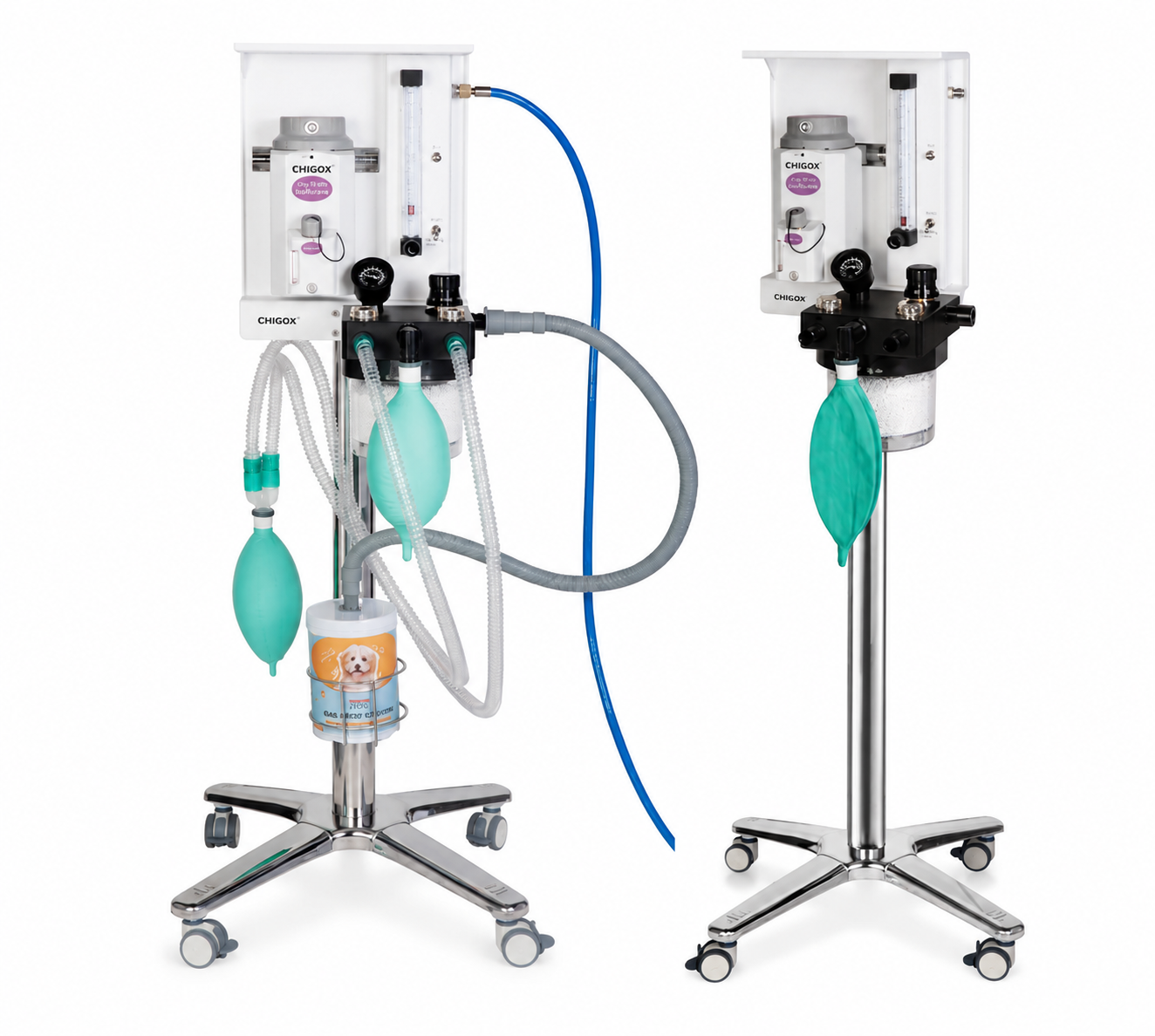
Buying a veterinary anesthesia machine is a clinical and operational decision. The right platform should match the animals you treat, the procedures you perform, the monitoring workflow your team can support and the level of ventilation control your surgeons expect. A mismatch can create bottlenecks in the operating room even when the device itself is well built.
This guide is written for veterinary clinics, hospitals, purchasing managers and distributors evaluating anesthesia equipment for small animal surgery and broader perioperative workflows. It focuses on practical buying criteria rather than unsupported marketing claims.
Start with Case Mix, Not the Quotation Sheet
Before comparing models, list the types of cases the clinic handles most often. A general practice that performs routine soft tissue surgery may need a different configuration than a referral hospital handling longer procedures, complex respiratory support or a wide range of patient sizes. The equipment decision should begin with species mix, body size range, expected procedure length and how often the system will be moved between rooms.
It is also useful to identify the smallest and largest patients that will use the machine regularly. That affects breathing circuit planning, ventilation expectations and whether the clinic should stay with a compact anesthesia machine or move up to a more advanced workstation platform.
Compact Veterinary Anesthesia Machine vs Advanced Workstation
Some clinics need a straightforward anesthesia delivery platform that is easy to move, easy to train on and suitable for common procedures. Others need a more integrated system that combines anesthesia, ventilation and expanded monitoring workflow. The right choice depends on procedure complexity and how much control the clinical team wants during surgery.
On the CHIGOX site, the CGVET-30 Veterinary Anesthesia Machine is presented as a compact platform for animal hospitals, clinics and research institutions, while the CGVET-A220T Veterinary Anesthesia Workstation is positioned as a more advanced integrated workstation. That distinction is useful when buyers are comparing entry and advanced configurations.
A growing clinic may prefer a compact unit if mobility, simplicity and routine general anesthesia are the main priorities. A larger hospital may prefer an integrated workstation when ventilation modes, broader patient coverage and operating room workflow matter more.
Breathing Circuits and Workflow Flexibility
Breathing system flexibility is one of the most practical buying factors because it affects daily setup and patient suitability. Clinics should review whether they need support for rebreathing, non-rebreathing or both, and how quickly the team can switch between configurations during a busy schedule.
The current CHIGOX veterinary anesthesia pages show support for rebreathing and non-rebreathing workflow in this category. The CGVET-30 product page also highlights ACGO switching, oxygen flush and airway pressure visibility. For buyers, this means the question is not only whether a machine delivers anesthetic agent, but whether it supports the team's normal transitions between different patient sizes and procedure styles.
Ventilation and Procedure Complexity
Not every clinic needs an advanced ventilation platform, but some do. If the team mainly manages routine cases with a stable workflow, a simpler system may be appropriate. If the hospital expects broader ventilation support, longer procedures or more demanding anesthesia management, a workstation-level solution may be worth evaluating.
The CHIGOX CGVET-A220T page emphasizes turbine-driven ventilation, multiple ventilation modes and integrated respiratory monitoring workflow. Buyers do not need to assume that every feature is necessary for every clinic. Instead, they should ask whether their caseload and staffing justify a more advanced ventilation platform and whether the team will use those functions consistently.
Monitoring Should Be Part of the Buying Decision
An anesthesia machine should not be evaluated in isolation from monitoring. Veterinary teams need a clear perioperative workflow, including airway pressure visibility and whatever additional monitoring the facility requires for its procedures and training standards. If monitoring is added later without planning, the overall setup may become harder to operate and harder to standardize.
The CHIGOX category and product pages reference monitoring integration and optional modules on the advanced workstation side. That makes monitoring part of the configuration discussion rather than an afterthought. Clinics should decide early who will watch parameters, where displays will sit and how alarms, tubing and cables will fit into the surgical room.
Questions Clinics Should Ask Before Ordering
Before ordering, clinics should ask practical questions that come directly from daily use. Will the machine stay in one surgery suite or move between rooms? Which vaporizers are needed for the intended workflow? How many staff members need training? Which accessories are expected on day one, and which can wait until case volume grows? A purchase becomes easier to defend when the team can answer these questions clearly.
It is also important to think about maintenance workflow. Buyers should confirm how accessories, breathing bags, absorbent components and related consumables will be managed. A machine that fits the room but not the clinic's supply routine can still create friction.
How Distributors Should Position Veterinary Anesthesia Equipment
Distributors should segment buyers instead of offering one generic quotation to every customer. A smaller clinic may want a compact anesthesia machine with practical mobility. A hospital or university may want a broader workstation discussion around ventilation, monitoring and room integration. The sales approach should match the buyer's clinical environment.
Distributors should also gather enough information before requesting pricing from the manufacturer. Useful details include animal types, expected procedure range, target market, preferred configuration and whether the buyer is comparing against a basic system or a more advanced workstation. That helps keep the quotation specific and avoids unnecessary back-and-forth.
Build Around Verified Site Evidence
When a website already has a clear product category and two anesthesia configurations, the strongest blog strategy is to connect buyer questions to those verified pages. For CHIGOX, that means using the Veterinary Anesthesia Machines & Workstations category as the main landing point, then guiding buyers to the compact CGVET-30 or the integrated CGVET-A220T depending on workflow needs.
That approach is safer and more persuasive than making unsupported promises. Buyers generally need a clearer configuration path, not exaggerated language.
Next Step for Clinics and Hospitals
Clinics that are preparing to buy should build a short internal checklist covering patient size range, room layout, circuit preference, monitoring expectations and the level of ventilation support they want. Once those answers are clear, it becomes much easier to compare models and request a relevant quotation.
For help comparing compact and advanced configurations, buyers can review the CHIGOX veterinary anesthesia category, visit the Veterinary product section or contact CHIGOX for configuration support.
FAQ
What should a clinic compare first when buying a veterinary anesthesia machine?
Start with patient size, procedure type, ventilation needs, monitoring plan and whether the clinic needs a compact anesthesia machine or a more advanced workstation.
When does a clinic need a veterinary anesthesia workstation instead of a basic machine?
A workstation becomes more relevant when the clinic handles longer procedures, wider patient size ranges, advanced ventilation requirements or a more complex surgical workflow.
Should clinics buy monitoring and anesthesia equipment together?
Many clinics evaluate them together because airway pressure, ventilation visibility and perioperative monitoring affect workflow and training decisions.
What information should distributors send when requesting a quotation?
Distributors should provide target market, preferred configuration, animal types, monitoring expectations and whether the order is for clinics, hospitals or resellers.
Need help choosing equipment?
Request a veterinary anesthesia configuration review from CHIGOX.